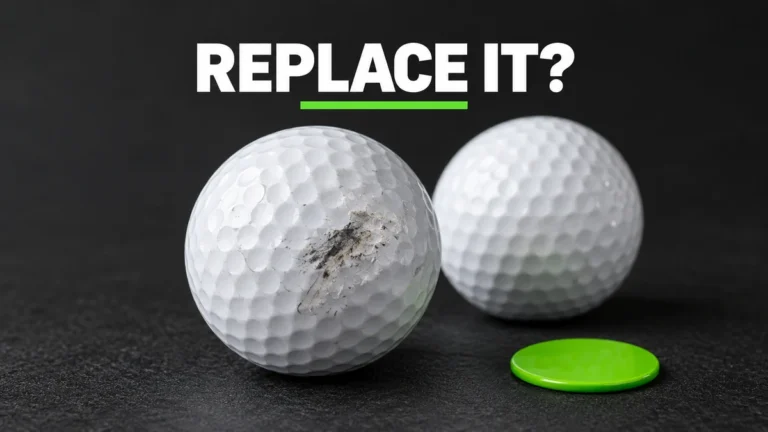

When Should You Replace Your Wedges? A Simple Groove-Wear Test
You do not need to replace a wedge just because it has been in your bag for a certain number of months. You also should not assume it still performs properly simply because the clubface looks acceptable.
The right time to replace a wedge is when a clean, properly struck shot no longer produces the predictable launch, carry, spin, and rollout you need.
That distinction matters. Many golfers blame worn grooves when the real problem is dirt, moisture, inconsistent contact, a different golf ball, or a changing lie. Other players keep using a favorite wedge long after its performance has noticeably declined.
Before you buy anything, establish whether the wedge is actually worn.

Why Wedge Grooves Wear Down
Every strike creates contact between the clubface, golf ball, and whatever is on the ground.
Ordinary shots from clean fairway grass produce gradual wear. Bunker practice can accelerate it because sand acts like an abrasive against the face. Sandy range turf, firm practice balls, debris, and repeated shots from poor lies can contribute too.
Titleist explains that frequent play, bunker shots, range balls, sandy lies, and other debris can gradually wear groove edges. Its wedge-replacement guidance recommends evaluating performance rather than assuming a wedge will last indefinitely.
That does not mean every golfer needs new wedges after the same number of rounds.
A player who practices bunker shots several times a week may wear a sand wedge differently from someone who plays twice a month. Your lob wedge may receive far more use than your gap wedge. Conditions, practice volume, club material, and the types of shots you play all affect wear.
Treat any suggested round count as a reminder to inspect and test—not an automatic replacement deadline.
Clean the Face Before Judging the Grooves
A dirty groove and a worn groove are not the same problem.
Grass, soil, and dried residue can reduce the quality of contact between the ball and face. If you test the wedge while the grooves are packed with dirt, you are not measuring its best available performance.
Start by following my guide on how to clean golf club grooves without damaging the face. Use a method appropriate for the club’s finish and the manufacturer’s care instructions.
Once the club is clean and dry, inspect it under good lighting.
Look at the area where you normally strike the ball. You may notice:
- A polished or smooth-looking impact area
- Rounded groove edges
- Small dents or visible damage
- Uneven wear across the face
- Rust or finish changes that make inspection difficult
Appearance gives you a reason to test. It does not tell you exactly how many revolutions of spin you have lost or whether replacement will improve your scores.
For that, you need a controlled comparison.
Resource: Grab these 50 practice templates… organized into Driving Range, Chipping, and Putting so you’re not guessing what to work on. Learn more on our home page.
Watch for Performance Changes
Groove wear is easier to recognize when you know what the wedge used to do.
The most useful warning signs include:
- Clean fairway shots releasing farther than expected
- Partial wedges launching differently despite similar contact
- Greater variation in how quickly shots stop
- More unpredictable results from light rough
- A widening carry-distance pattern
- One wedge behaving noticeably differently from the others
None of those observations proves that grooves are the only cause.
A different ball, wet grass, reduced swing speed, contact low on the face, or a change in delivery can produce similar results. That is why I would not replace a wedge based on one shot that rolled over the green.
Look for a repeated pattern under comparable conditions.
Use This Simple Groove-Wear Test
The best test compares your current wedge with a newer wedge of similar loft and specifications.
A fitting facility or golf shop may be able to help. If you cannot access a comparison wedge, you can still build a baseline with your current club and repeat the test later.
Step 1: Standardize the test
Use:
- The same model of golf ball
- A clean, dry lie
- The same measured target
- A clean and dry clubface
- Similar weather conditions
- A comfortable swing you can repeat
Do not compare a worn 56-degree wedge with a new 52-degree wedge and treat the difference as groove wear. Loft, sole design, shaft, head construction, and delivery may all change the result.
Step 2: Hit ten stock shots
Choose a distance that allows you to make a controlled swing. Record the carry and final result of ten shots.
If you have access to reliable launch-monitor data, note:
- Carry distance
- Launch
- Spin
- Peak height
- Landing angle
- Dispersion
If you do not have a launch monitor, use a practice green where you can observe the landing point and rollout. Mark the approximate carry area and estimate how far each ball finishes beyond it.
Grade the strike too. A poor strike should not carry the same weight as a centered one.
Step 3: Hit ten partial shots
Groove performance matters on scoring shots where you expect the ball to react predictably after landing.
Select a partial-wedge distance—perhaps 40 or 50 yards—and repeat the process. My guide to creating spin on pitch shots from 30 to 60 yards explains why the lie, ball, strike, and clubface condition all matter.
Do not chase one ball that spins backward. Look for the pattern across the group.
Step 4: Compare with a newer wedge
Repeat the test with a newer wedge that is as similar as possible.
You are looking for meaningful differences such as:
- A tighter carry range
- More consistent launch
- Less variation in rollout
- Better stopping power from comparable strikes
- A smaller front-to-back dispersion pattern
The new wedge does not need to create a dramatic visual difference on every shot. The value may be improved predictability.
Step 5: Retest before purchasing
If the first comparison suggests a meaningful difference, repeat it on another day.
One session can be distorted by your swing, weather, range balls, or limited sample size. A second test helps you avoid replacing a club because of temporary conditions.
Do Not Use Spin Alone
More spin is not automatically better.
Your goal is to produce the flight and stopping pattern required for the shot. A wedge that spins more but creates inconsistent carry distances does not necessarily solve your scoring problem.
Measure the complete outcome:
- Where did the ball launch?
- How far did it carry?
- Where did it land relative to the target?
- How far did it finish from the target?
- How similar were the good strikes?
Golfers often focus on the most impressive shot in a group. As a coach, I am more interested in the size of the pattern.
A predictable eight-foot rollout can be useful. A group that sometimes stops immediately and sometimes releases 25 feet is harder to trust.
Which Wedge Should You Replace First?
You may not need to replace every wedge at once.
Begin with the club that shows both the most wear and the greatest performance problem. This is often the sand or lob wedge because those clubs see more bunker practice, partial shots, and abrasive conditions.
However, usage differs by player.
If you hit your gap wedge repeatedly during practice and rarely use a lob wedge, the gap wedge may wear first. If you play a course with many greenside bunkers, your sand wedge may receive considerably more abrasive contact.
Review how each wedge is actually used.
You can also run a separate test for each club instead of assuming the entire set is in the same condition.
A Hypothetical High-School Golfer Example
Imagine a high-school player whose 56-degree wedge releases farther than expected during tournament practice rounds.
This is a hypothetical example.
The player immediately assumes the grooves are worn. However, the face is dirty, the practice balls are different from the player’s normal ball, and several shots are struck low on the face.
I would not recommend a new wedge yet.
First, we would clean the face, use the player’s regular ball, choose a consistent lie, and grade the contact. We would then compare ten shots with the current wedge against ten shots with a newer club of similar loft.
If the newer wedge produces a meaningfully tighter pattern across two sessions, replacement becomes a reasonable decision. If both clubs perform similarly, the player should work on contact and distance control instead.
That process protects the player from buying equipment to solve a practice problem.
A 15-Ball Wedge Performance Check
You can also monitor your wedge between formal comparisons.
Hit five balls to each of three targets:
- Short target
- Medium target
- Longer target
Give yourself one point when the ball lands inside your selected carry zone and one additional point when it finishes inside your overall scoring zone.
The maximum score is 30.
Record:
- Total score
- Number of solid strikes
- Typical miss
- Surface and weather conditions
- Ball model
- Clubface condition
Repeat the test monthly or after a heavy period of bunker practice. A declining score does not automatically prove groove wear, but it tells you to investigate.
If you are unsure which wedge or distance is costing you the most shots, use the free Shot Leak Audit and Break 90 Blueprint to identify the bigger scoring problem before spending money.
Help New Grooves Last Longer
You cannot prevent normal wear, but you can avoid unnecessary damage.
- Keep the grooves clear during practice and play.
- Wipe moisture and sand from the face.
- Do not use tools that could damage the finish or alter the grooves.
- Avoid striking balls covered with abrasive debris when possible.
- Dry the club before returning it to storage.
- Use head protection if bag chatter is damaging the face.
Care does not restore material that has already worn away. It helps you preserve the club’s condition and makes future performance tests more reliable.
Replace the Wedge When the Evidence Supports It
A familiar wedge can feel difficult to remove from the bag. That familiarity has value, especially when you know its carry and rollout patterns.
But familiarity should not hide a measurable loss of control.
Clean the club, test it with your normal ball, compare it with a similar newer wedge, and judge the full pattern—not one spinning shot. If the newer club repeatedly gives you more predictable carry and stopping performance, it may be time to make the change.
Once your equipment is settled, turn that confidence into better scoring with the structured wedge and short-game sessions available through Foy Golf Academy practice plans. The purpose of a fresh wedge is not simply to own sharper grooves. It is to build shots you can trust.