
Can Adjusting Driver Loft Help Your Slice?
Learn how driver loft, lie angle, and draw settings differ, then use a simple 20-ball test to find out whether an adjustment makes your slice more playable.

Learn how driver loft, lie angle, and draw settings differ, then use a simple 20-ball test to find out whether an adjustment makes your slice more playable.

Gripping down on your driver may improve control, but does it cost distance? Use this simple comparison to test contact, accuracy, carry, and major misses.

Learn how driver club path, clubface direction, and strike location create slices and hooks, then use practical drills to build a more reliable tee shot.

Build a driver you can trust with repeatable setup, centered contact, predictable ball flight, usable speed, and a practical 24-ball training session.

Finding your drive in a divot is frustrating, but the next shot still deserves a clear plan. Learn how to assess the depression, adjust your setup, choose a realistic target, and practice handling imperfect fairway lies.
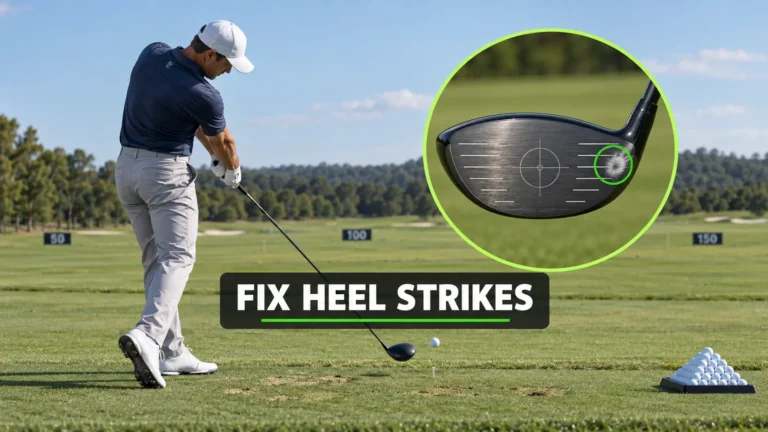
Repeated heel strikes can cost distance and send drives slicing offline. Diagnose your contact with face spray, adjust your setup, and retest it over 20 balls.

Learn how to choose suitable tees, use the legal teeing area, set your tee height, and align toward a smarter target before every tee shot.

Hybrids often make solid contact easier, but hooks, slices and poor club choices can still cost shots. Learn the correct ball position, a shallow sweep feel, three scored drills and when to choose a hybrid.

Topped, thin, low-fading fairway woods usually begin with poor contact. Learn how ball position and strike location affect the shot, then use a scored five-ball drill to build reliable contact.

You don’t need a driving range to work on your golf swing. These 15 at-home golf swing drills help improve your setup, rotation, impact, tempo and more without hitting a ball.