
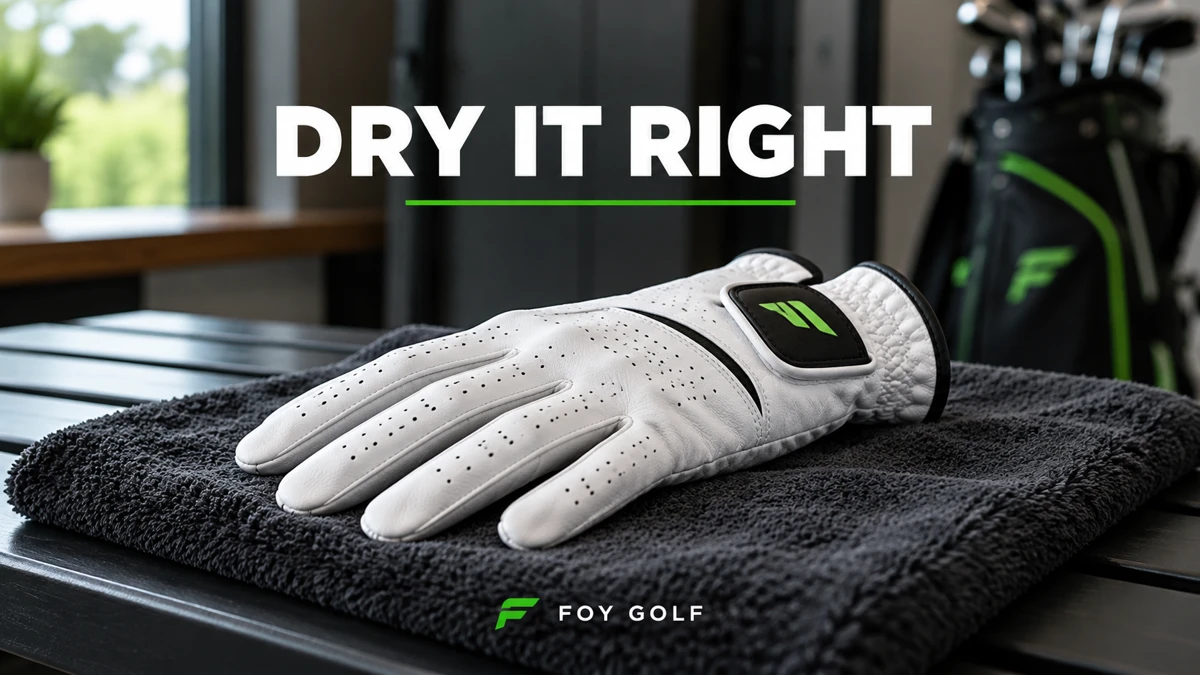
How to Dry a Golf Glove Without Making It Stiff
You finish a warm round, take off a damp glove, and push it into the golf bag.
The next time you pull it out, the fingers are folded, the palm feels crusty, and putting it on takes more effort than it should.
At that point, it is tempting to stretch it aggressively, wet it again, or reach for a hair dryer.
Start with a simpler approach.
To dry a golf glove, gently blot away excess moisture, smooth it into its natural shape, and let it air dry away from direct heat. Wait until it is fully dry before putting it into enclosed storage. Always follow the care instructions for its material.
Good care won’t reverse every bit of wear. It can help you avoid turning a usable damp glove into a misshapen one through poor handling.
Here is the routine I would build into the end of every round.

Check the Material Before You Clean Anything
Drying a damp glove and washing a dirty glove are different jobs.
If your glove is simply sweaty, you don’t automatically need to soak it.
Start by checking the label, packaging, or manufacturer’s care page. Leather, synthetic, mixed-material, and rain gloves can have different instructions.
For example, FootJoy’s glove-care guidance advises against submerging fully leather gloves. It recommends a damp cloth for cleaning them and emphasizes checking the care instructions.
That matters because a cleaning method suitable for one glove may be unsuitable for another.
If you’re unsure what type you own, find the model before experimenting. My guide to choosing a golf glove explains the main material and performance differences.
Remove the Glove Gently
Open the closure fully before taking the glove off.
Ease your hand out instead of yanking one fingertip or pulling hard on a single edge. A wet glove is already an awkward item to handle; there is no benefit to adding unnecessary strain.
Once it is off, open the folded fingers and palm.
You don’t need to stretch the glove larger. You are simply returning it to a relaxed, recognizable hand shape.
This is also a useful moment to inspect it. Look for a torn seam, a hole in the palm, or a closure that no longer holds securely. Those problems need a different decision from ordinary drying.
Blot Away Surface Moisture
Use a clean, dry towel to gently absorb excess moisture.
Press the towel against the palm and fingers. Avoid twisting the glove as though you are wringing out a washcloth.
If the towel is already wet from cleaning clubs, use another one. A saturated towel is a poor starting point for drying anything else.
You do not need to rub hard or make the glove feel completely dry immediately. The goal is to remove what the towel can absorb, then let air drying finish the job.
FootJoy’s care instructions support towel patting, reshaping while damp, and air drying. They also advise against machine drying or placing the glove near a heat source.
Resource: Grab these 50 practice templates… organized into Driving Range, Chipping, and Putting so you’re not guessing what to work on. Learn more on our home page.
Give It a Consistent Place to Dry
Choose an indoor spot with ordinary airflow, away from direct heat and strong sunlight.
A clean, dry surface where you can lay the glove in its natural shape is a practical option when consistent with its care directions.
Keep the fingers open rather than folded underneath the palm. If the towel or surface beneath it becomes damp, replace it or move the glove to a dry area.
I would make this a permanent part of your equipment routine.
Pick a place you will remember: beside the shoes you are airing out, near your golf storage area, or on a designated shelf.
The specific location matters less than remembering to take the glove out of the bag.
A drying routine that only happens when you notice a problem is difficult to rely on.
Don’t Use Heat to Meet a Deadline
A hair dryer, radiator, clothes dryer, or hot dashboard can seem convenient when you want to practice again soon.
Avoid using heat as a shortcut.
If tomorrow’s glove is still damp, the better plan is to use a dry spare that fits correctly. Don’t turn equipment care into a race against your next tee time.
There also isn’t one reliable drying time for every glove.
Material, how wet it became, airflow, and room conditions all matter. Check the glove itself instead of assuming that a certain number of hours guarantees readiness.
Pay attention to areas that were folded or held against another surface. A glove can feel dry in one spot while remaining damp elsewhere.
Store It Only After It Has Dried
Air drying and storage should be two separate steps.
Once the glove is completely dry, keep it reasonably flat in a clean, dry place where it won’t be crushed beneath other equipment.
The original sleeve or a suitable glove organizer can help maintain its shape. It should not become a place to seal away a damp glove.
Keep the ready-to-use spare separate from the one you just wore.
Otherwise, it is easy to arrive at the next round with two gloves and discover that neither is ready.
For a simple system, designate one location for dry gloves and another temporary location for gloves that need attention.
Rotate Gloves Before One Becomes Unusable
A spare glove is useful during a long practice session as well as during a round.
If your glove becomes heavily damp and stops feeling secure, switch to a dry one. Give the first glove a chance to air out rather than repeatedly pulling it on and off while it remains saturated.
Bionic’s golf glove care guide also recommends airing gloves between holes and allowing them to air dry.
I would use scheduled breaks to check the equipment.
During a range session, pause after a small group of shots. Check your hands, glove, and club grip before beginning the next group.
That pause also gives you a chance to review what you are practicing. There is little value in rushing through more swings when you are distracted by a slippery hold.
Check Whether the Glove Is Ready to Play
Once the glove is dry, put it on gently.
Close the fastener and check three things:
- Fit: Does it sit securely without excessive loose material?
- Movement: Can you close your hand comfortably?
- Condition: Are the palm, seams, and closure intact?
Then hold a clean, dry club and make a few small, controlled rehearsal motions.
You are checking whether the connection feels dependable. This is not a full-speed test of a questionable glove.
If the club still feels insecure, check the grip as well. A worn or dirty grip can create a problem that changing gloves won’t solve.
My guide to golf grip pressure can help you explore a comfortable hold once the equipment itself is in suitable condition.
What If the Glove Is Already Stiff?
First, separate stiffness from structural damage.
A folded glove may need gentle handling to return to its normal shape. A glove with cracked material, a torn palm, or a badly stretched fit may be ready for replacement.
Don’t assume that repeatedly wetting, stretching, or heating it will restore its original condition.
Avoid adding household oils, lotions, or leather products unless the glove manufacturer specifically recommends them. A product intended for another leather item may change how the glove feels against a golf grip.
If the glove remains uncomfortable or unreliable after appropriate care, retire it.
You want equipment you can trust without having to think about it over the ball.
A Hypothetical High-School Golf Example
Imagine a high-school golfer finishing an afternoon match in humid weather.
The player stuffs a damp glove into the same pocket as a wet towel. Before the next practice, the glove feels stiff and unpleasant, so the player starts gripping the club more tightly.
This is a hypothetical example.
I would begin by changing the after-match routine:
- Remove the wet towel from the bag.
- Take the glove out and inspect it.
- Blot excess moisture.
- Arrange it for air drying.
- Confirm that a dry spare is available.
Those steps don’t require a swing change.
If equipment problems keep distracting you from the larger issues in your game, use the free Shot Leak Audit and Break 90 Blueprint to identify your main scoring priorities. Get your equipment ready, then spend practice time on the skills that need work.
Make the Routine Easy to Repeat
For your next three rounds or practice sessions, track four actions:
- Took the glove out of the bag.
- Removed excess moisture and gently reshaped it.
- Left it to dry in the designated place.
- Checked it before returning it to storage.
Give yourself one point for each completed action, for a possible twelve points across three sessions.
This is a consistency check for your routine, not a glove-performance test.
If you keep missing one step, change the arrangement. Put the drying towel somewhere visible. Set a reminder when you unload the bag. Keep the spare where you can check it before leaving home.
Reliable preparation makes it easier to arrive ready to practice.
For structured sessions that connect preparation, skill development, and scoring, explore the Foy Golf Academy practice plans. Have your equipment ready, choose a clear goal, and make the time you spend practicing count.