Foam vs. Plastic Practice Golf Balls: What Can You Actually Learn?
Foam and plastic practice golf balls can help you improve at home, but only when you understand what their flight is actually telling you.
Neither type of practice ball perfectly copies a regulation golf ball. The weight, construction, launch, spin and carry distance are different. That does not make them useless. It simply means you should match the ball to the part of your golf swing you want to train.
In my coaching, I want every practice drill to produce useful feedback. If a golfer is hitting foam or plastic balls without knowing what to watch, the session can turn into nothing more than exercise. When the golfer has a clear target and a way to judge each swing, these inexpensive practice balls become much more valuable.
Foam and Plastic Practice Balls Are Not All the Same
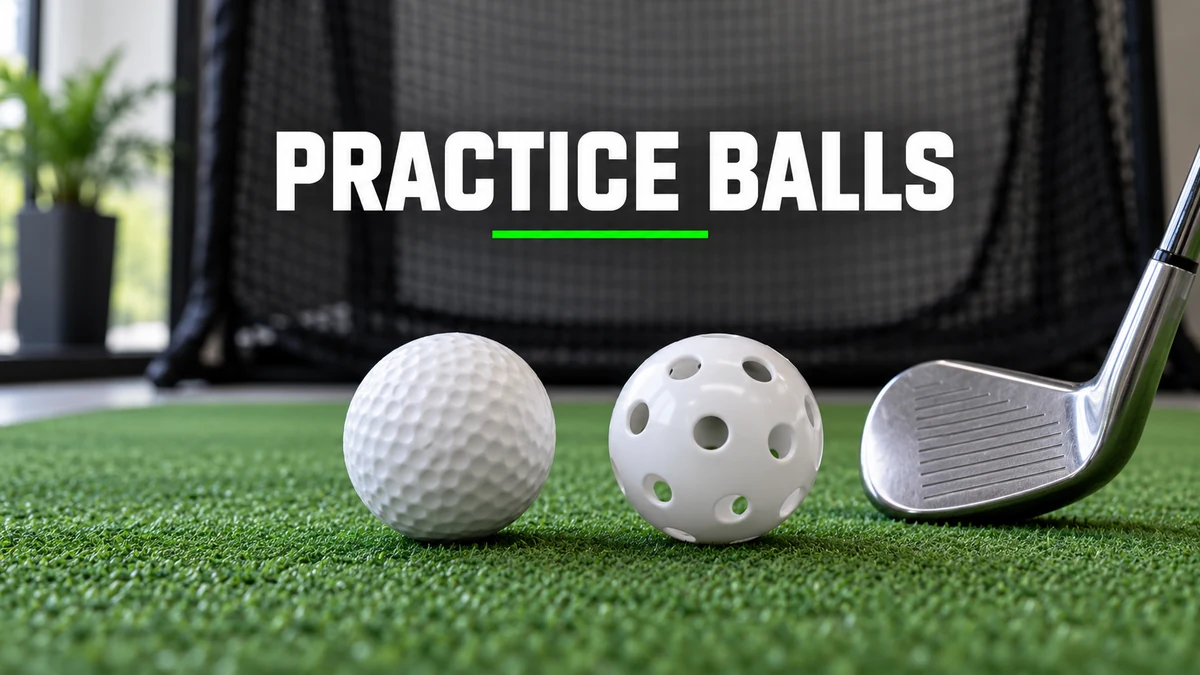
“Foam ball” usually refers to a lightweight ball made from dense foam with molded dimples. It tends to feel firmer than a hollow plastic ball and normally produces a more readable short flight.
The basic plastic practice ball is hollow and often has holes throughout its shell. These balls are extremely light and are designed to travel a limited distance.
Those descriptions are useful, but they are not universal standards. Some foam balls are much denser than others, and there are specialized plastic designs that behave differently from traditional perforated balls.
For example, GoSports describes its foam practice ball as weighing approximately 9.5 to 10.5 grams, with a dimple pattern intended to provide useful trajectory feedback. BirdieBall uses a specialized plastic limited-flight design and says its product can show shot shape while traveling a maximum of approximately 40 yards. These are manufacturer descriptions for those specific products—not promises that apply to every foam or plastic practice ball. GoSports – Foam Practice Balls
That variation is why I recommend testing the exact practice balls you own instead of assuming every foam ball or plastic ball will react the same way.
What Foam Practice Golf Balls Can Teach You
A reasonably dense foam ball can provide useful feedback in several areas.
Centered Contact
You can usually feel the difference between a solid strike and a shot hit from the toe, heel or bottom of the clubface. This makes foam balls useful for slow-motion swings, small pitch shots and controlled full-swing rehearsals.
Add foot spray or impact tape to the clubface if you want more precise strike feedback. The ball’s flight gives you one piece of information, while the mark on the clubface confirms where contact occurred.
Initial Direction
Foam balls can help you see whether the shot starts left, right or reasonably close to your intended line.
Set up a narrow gate five to ten feet in front of the hitting position. Your goal is to launch the ball through the gate—not to judge how far it eventually curves.
Short-Game Trajectory
Foam balls can be useful for practicing low chips, medium-height pitches and higher soft shots in a safe space.
You will not get true rollout on a carpet or backyard surface, but you can still work on:
- Contact quality
- Launch window
- Landing location
- Swing length
- Clubface control
This makes foam balls a useful companion to my guide on how to practice chipping at home or in your backyard.
Routine and Setup
Foam balls work well when you are training posture, alignment, ball position and a repeatable pre-shot routine. These are controllable skills that do not depend on the ball flying 150 yards.
What Plastic Practice Golf Balls Can Teach You
Traditional hollow plastic balls provide less realistic impact feedback, but they still have a purpose.
Making Repetitions in a Small Space
Plastic balls are useful when space is extremely limited. A golfer can rehearse setup, takeaway and controlled contact without needing a long backyard.
This is particularly helpful for a high school golfer who wants to fit in ten minutes of practice before school or after homework.
Basic Start Direction
A plastic ball can show a major push or pull. If every shot launches immediately left of the target, that is still meaningful feedback.
However, I would not use the complete flight of a basic perforated ball to diagnose a small draw or fade. Wind, ball design and extremely low weight can exaggerate or reduce the curve.
Low-Speed Contact Drills
Plastic balls can work for short chips, one-handed contact drills and small swings designed to improve coordination.
They are less useful when the golfer starts swinging harder and expects the ball to react like a regulation ball.
Foam vs. Plastic Practice Balls: Quick Comparison
| Practice goal | Foam ball | Hollow plastic ball |
|---|---|---|
| Setup and pre-shot routine | Useful | Useful |
| Slow-motion swing rehearsals | Useful | Useful |
| Basic start direction | Better | Limited |
| Centered-contact feedback | Better | Limited |
| Short-game launch window | Useful | Usable at low speed |
| Reliable shot curvature | Product-dependent | Usually limited |
| Carry-distance testing | Not reliable | Not reliable |
| Club gapping | Not suitable | Not suitable |
| Realistic spin and stopping power | Not suitable | Not suitable |
What These Practice Balls Cannot Tell You
The biggest mistake is treating limited-flight balls as miniature versions of a real golf ball.
Do not use foam or plastic balls to determine:
- Your actual club distances
- Precise launch angle
- Peak height
- Backspin
- Greenside stopping power
- Driver performance
- Whether a club fits your swing
If you want to compare distances or make equipment decisions, use regulation balls in an appropriate practice area. My comparison of range balls versus regular golf balls explains why even full-size range balls may produce different results from the ball you play on the course.
A launch monitor may also struggle to read lightweight practice balls. Unless the monitor’s manufacturer explicitly supports the ball you are using, do not treat the displayed distance or spin numbers as dependable.
Watch Out for Mats Hiding Heavy Contact
Practicing from a mat introduces another problem: the club can strike the mat behind the ball and still slide into contact.
The shot may appear acceptable even though the swing would have produced a heavy shot from grass.
Place a folded towel two or three inches behind the ball. If the club hits the towel before the ball, you know the low point was too far back.
You can also place a strip of painter’s tape across the mat and position the ball just ahead of it. The objective is to contact the ball and then brush the mat on the target side of the tape.
These simple constraints make indoor practice much more honest. You can find additional setup ideas in my guide to practicing golf at home without a simulator.
A Simple 18-Ball Comparison Test
If you own both types of practice ball, use this test to decide which gives you the most helpful feedback.
Choose one club and one target line. Hit:
- Six plastic practice balls
- Six foam practice balls
- Six regulation balls into a suitable net or at the practice range
For every shot, record two items:
- Did the ball start on the intended line?
- Did you strike the center of the clubface?
Do not compare total distance. Compare whether the feedback from each practice ball matches what you experience with the regulation balls.
A foam ball may prove more useful for strike and start direction. A plastic ball may be perfectly adequate for rehearsing setup and making low-speed swings. The best choice depends on the drill, the available space and the individual product.
A Hypothetical High School Golfer Example
Imagine a high school golfer practicing in a garage with only 15 feet of safe ball flight.
I would not ask that player to judge a draw or fade from 15 feet. Instead, I would create a start-line gate, place a towel behind the ball and use foot spray on the clubface.
The golfer’s score for each shot would come from three questions:
- Did I miss the towel?
- Did I strike near the center?
- Did the ball pass through the gate?
That session can improve contact and start-line awareness even though the golfer never sees the full flight.
Later, the player can transfer the same drill to the range with regular golf balls and confirm how the improved strike affects the complete shot.
Which Practice Ball Should You Buy?
Choose foam practice balls if you want:
- Better impact feedback
- A more visible initial trajectory
- Short-game practice
- A ball that behaves somewhat closer to a real ball at low speed
Choose basic hollow plastic balls if you want:
- Extremely limited flight
- Low-cost repetition
- Setup and routine work
- A ball for small swings in a tight practice space
A specialized limited-flight plastic ball may provide more shot-shape feedback than a basic perforated ball, but evaluate the individual product rather than relying only on the material label.
Remember that limited-flight does not mean harmless. Use a proper net or clear practice area, keep people and breakable objects away from the target line and follow the product manufacturer’s safety guidance.
Turn Practice Into Measurable Improvement
The value of a practice ball is not determined by how closely it resembles a regulation ball. Its value comes from whether it gives you clear feedback for the skill you are training.
Use foam or plastic balls for setup, contact, start direction and short-game motion. Use regular golf balls when you need trustworthy information about full flight, distance, spin and stopping power.
If you are unsure which part of your game should receive the most practice time, start with my free Golf Game Audit. It will help you identify the areas costing you the most strokes.
Once you know what to work on, use one of my structured Better Golf Practice Plans to turn that weakness into a repeatable training routine.