
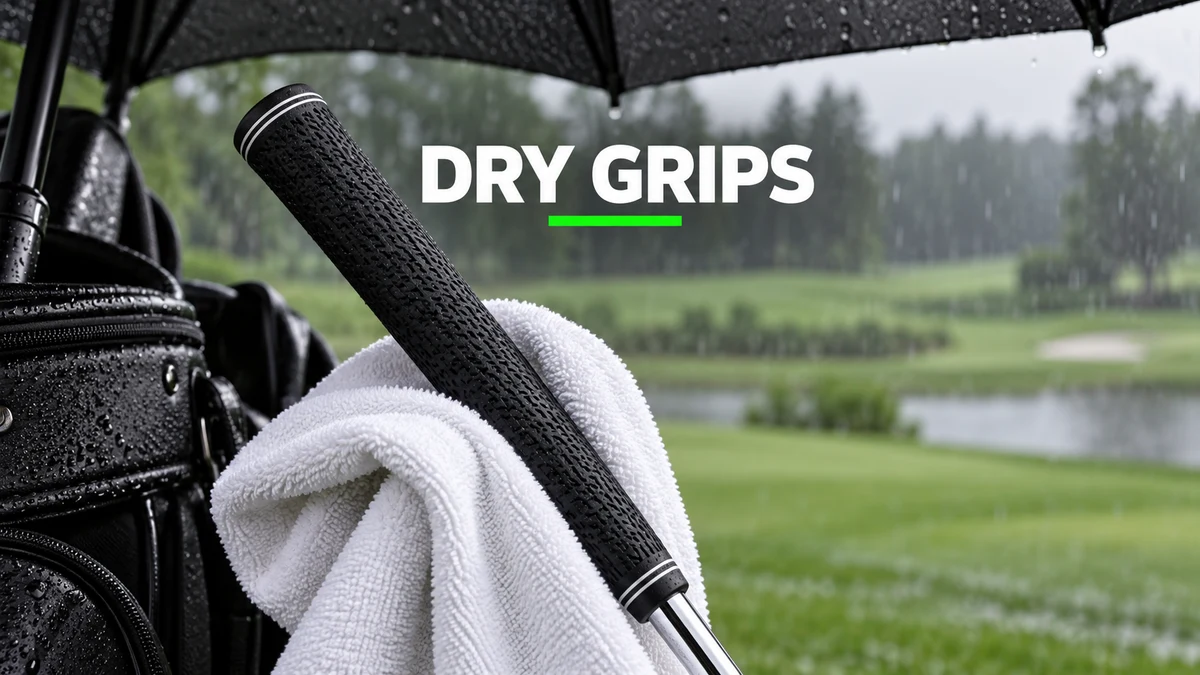
How to Keep Your Golf Grips Dry in the Rain
The rain starts lightly, so you keep playing without changing anything. A few holes later, your towel is soaked, your glove feels slippery, and you’re squeezing the club harder just to feel secure.
By that point, drying the grip before one shot won’t solve the whole problem. Everything touching it is already wet.
The best way to keep golf grips dry in the rain is to protect your towels, gloves, and bag opening before they become saturated, then follow the same short routine between shots.
You don’t need an elaborate setup. You need a dry place for the things that must stay dry, plus a plan for when conditions overwhelm your regular glove.
Here’s how I would organize it.
Start With Grips That Are Clean and in Good Condition
Rain management begins before the round.
Check the clubs you use most often. Do the grips feel secure when dry, or do they already feel smooth and slippery? Look for obvious wear, shiny patches, and areas where the texture has deteriorated.
A towel won’t restore worn-out material.
For routine care, Golf Pride’s grip-care guidance recommends regular cleaning, thorough drying, and storage in a cool, dry location. It also advises preventing residue from your hands from transferring to the grips. Follow the cleaning instructions for your particular grip material.
Do this ahead of time so everything is dry before the clubs go back in the bag.
I would also check whether the glove you plan to wear fits properly. A loose, stretched glove adds another source of movement between your hand and the club.
Give Your Towels Separate Jobs
One towel gets overwhelmed quickly when you use it for muddy clubheads, wet hands, and grips.
My suggested setup has three parts:
- A working towel for clubheads and general cleaning.
- A protected dry towel for hands and grips.
- A backup towel inside a waterproof pouch or sealed bag.
The protected towel is the important one. Hanging it outside the bag during steady rain defeats its purpose.
Keep it somewhere you can reach without exposing the whole towel. Under an umbrella can work while you’re using it, but windblown rain may still reach it. A genuinely waterproof compartment or pouch gives you a more dependable reserve.
Rotate before the towel becomes useless
A damp towel may still remove surface water, but it eventually reaches the point where it mostly spreads moisture around.
Switch to your backup before that happens.
Don’t put the wet towel back into the same pouch as the dry one. Once those supplies mix, you lose the benefit of carrying a spare.
Protect the Bag Opening Between Shots
Your bag’s rain hood only helps when you close it.
Open it long enough to select or replace a club, then cover the opening again. Leaving it open while walking to the green gives rain more time to reach the interior.
A cart roof doesn’t necessarily protect clubs mounted behind the seats. Pay attention to where water actually lands.
When carrying several clubs to a shot, avoid setting their grips on wet grass. Place them on a dry support under shelter if available, or bring only the clubs you reasonably need.
The putter deserves the same attention. It’s easy to keep an iron dry and then leave the putter grip lying in the rough while you chip.
Use the Same Routine Before Every Shot
Keep the routine short enough that you’ll actually repeat it.
1. Make the decision while the club is protected
Assess the lie, target, and distance before exposing the club unnecessarily.
You don’t need the grip sitting in the rain while you debate between two clubs.
2. Check your hands and glove
A dry grip can become wet again as soon as you take hold of it.
Dry your bare hand when needed. If you’re using a conventional glove that has become saturated or slippery, change it rather than repeatedly drying the grip and ignoring the glove.
3. Wipe the grip under shelter
Use the protected towel and cover the full area your hands will contact.
Rotate the club as you wipe. A quick swipe down one side may leave water on the other side.
4. Move into your normal routine
Once the club feels secure, make your practice motion, address the ball, and play.
Avoid adding several unnecessary rehearsals while the grip is exposed. The purpose is to arrive at the ball ready, not to rush the swing.
5. Reset before moving on
Wipe the club as needed, return it to the bag, and close the cover.
That reset prepares the next shot. Without it, each hole becomes another attempt to rescue equipment that keeps getting wetter.
Know When Rain Gloves Make More Sense
Keeping a regular glove dry becomes difficult in prolonged rain.
Purpose-built rain gloves offer another approach. They use materials designed for wet conditions rather than relying on the same feel as a dry leather glove.
For example, FootJoy’s RainGrip gloves use a palm material designed to provide grip in wet or humid conditions. Follow the instructions for the specific gloves you own; don’t assume every glove should be treated the same way.
Try rain gloves during practice before trusting them in a competitive round. You want to know how the fit feels with your grips and whether wearing a pair changes your usual hand placement.
Rain gloves also don’t eliminate the need to manage the rest of your equipment. Keep protecting the bag and preserving a dry towel.
Don’t Solve Slipping by Squeezing as Hard as Possible
When the club feels insecure, gripping harder is an understandable reaction.
But squeezing harder doesn’t remove water or fix a saturated glove. It can also make your arms and shoulders feel more tense than usual.
Address the equipment first.
Then use enough pressure to control the club comfortably. My guide to golf grip pressure explains how to explore that balance without treating one pressure number as correct for everybody.
If the club still feels as though it might slip during a gentle rehearsal, stop and reset. Don’t test an insecure grip with a full-speed swing.
A Hypothetical High-School Golf Example
Imagine a high-school golfer reaching the seventh hole during steady rain.
The player has one towel clipped outside the bag and a regular glove that is now soaked. Before every shot, the player wipes the grip with the same wet towel and then complains that the club still feels slippery.
This is a hypothetical coaching example.
I would begin with the equipment routine:
- Where is the dry reserve?
- Is the glove still providing a secure hold?
- Is the bag cover being closed?
- Are grips being placed on wet grass around the greens?
Those questions are more useful than immediately changing the swing.
If difficult-weather rounds regularly become big scores, use the free Shot Leak Audit and Break 90 Blueprint to separate preparation problems from contact and decision-making problems.
Rehearse the Routine Before You Need It
You can practice equipment management on a dry day.
Set up your bag with its rain cover, two towels, and spare glove or rain gloves. You don’t need to spray water on your grips.
Complete five practice cycles:
- Choose a club with the bag covered.
- Retrieve it and close the cover.
- Check your hands and glove.
- Rehearse wiping the grip.
- Make a controlled practice motion and reset the equipment.
Give yourself one point per cycle when you complete every step without putting a grip or protected towel on the ground.
Aim for five out of five.
This isn’t a speed contest. The goal is to make the equipment routine familiar enough that it doesn’t consume your attention during the round.
During your next safe practice session in light rain, check whether the same arrangement actually keeps your reserve supplies dry. Change the storage location if water reaches them.
Adjust to the Course Conditions Too
Secure grips help you make your intended swing. They don’t make the course play like it’s dry.
Wet turf, muddy lies, and changing rollout still require different decisions. For shots around the green, read my guide to chipping from wet grass or mud.
Keep those adjustments separate in your mind. First establish a secure hold on the club. Then choose the shot the lie allows.
And if thunder or lightning develops, stop playing and seek appropriate shelter. A rain routine is for playable weather.
Finish the Round by Drying Everything
Don’t leave the wet setup sealed inside the bag overnight.
Remove damp towels and gloves, open wet compartments, and dry the clubs before storage. Follow the glove manufacturer’s care directions rather than trying to speed things up with strong heat.
Repack the dry reserve before your next round.
For practice that includes preparation, shot selection, and the skills needed to score, explore the Foy Golf Academy practice plans. Build a routine you can trust when conditions become less comfortable.