
What Score Do You Need to Make a High School Golf Team?
There is no universal score that guarantees a spot on a high school golf team. Use these realistic varsity and JV ranges to evaluate your game and prepare for tryouts.

There is no universal score that guarantees a spot on a high school golf team. Use these realistic varsity and JV ranges to evaluate your game and prepare for tryouts.
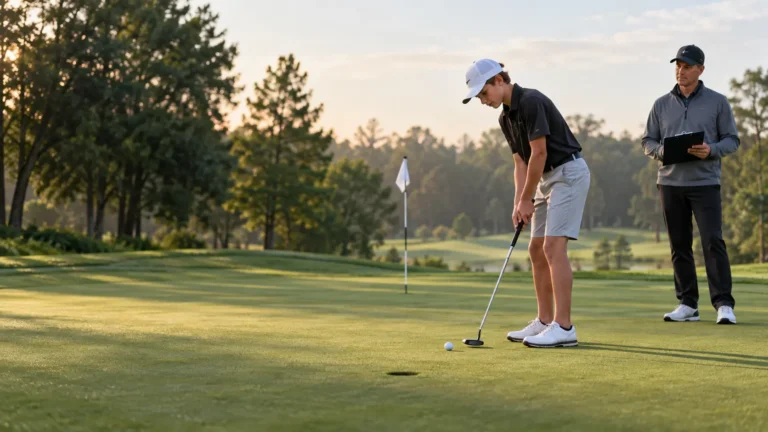
Use this 30-day middle school golf tryout plan to improve contact, short game, putting, course management, pace of play, and confidence before the evaluation.

Getting a middle schooler into golf should begin with fun, achievable challenges—not swing mechanics and score pressure. Use this 30-day plan to help your child start practicing, playing, and developing a genuine interest in the game.

Repeated heel strikes can cost distance and send drives slicing offline. Diagnose your contact with face spray, adjust your setup, and retest it over 20 balls.

Learn how to choose suitable tees, use the legal teeing area, set your tee height, and align toward a smarter target before every tee shot.

The flop shot can save you when a bunker, thick rough, or downhill green leaves almost no room—but only if the lie and situation are right.

Stop guessing which way a putt will break. Use this step-by-step green-reading routine to assess the entire green, measure the putt, choose a starting line, and match that line to the correct speed.

Hybrids often make solid contact easier, but hooks, slices and poor club choices can still cost shots. Learn the correct ball position, a shallow sweep feel, three scored drills and when to choose a hybrid.

Topped, thin, low-fading fairway woods usually begin with poor contact. Learn how ball position and strike location affect the shot, then use a scored five-ball drill to build reliable contact.

You don’t need a driving range to work on your golf swing. These 15 at-home golf swing drills help improve your setup, rotation, impact, tempo and more without hitting a ball.